Well, the 2012 Hospitality Design Expo and Conference just wrapped up last week here in Las Vegas. This year brought more serious Designers and Developers, which are actually working on new jobs, than we had in the past couple of years. The show is always more amazing when you are in the midst of projects, hoping to find that next best market introduction to include in your “designs in process”!
This year for our firm, it appeared to be about lighting and the latest plumbing and bath fixtures!
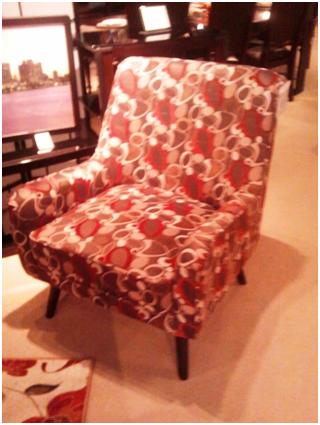
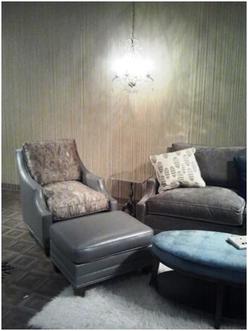
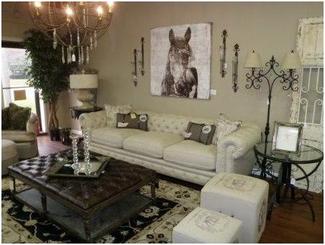
Here are some of our finds and you will hopefully see these in some of our up and coming designs!
Rohl – Jorger Bath and Fixtures Not your standard Grab Bars anymore!
These bars by greatgrabz.com were featured at the show noting that the term ADA is passé! The concept of Universal Living Design has taken its place. These are beautiful in any setting! Old is new! Finishes coming back again! Symmons Faucets We are seeing that Bright Polished Chrome is becoming the new Brushed Stainless and Brass is coming back as the new Nickel! Lighting the way!
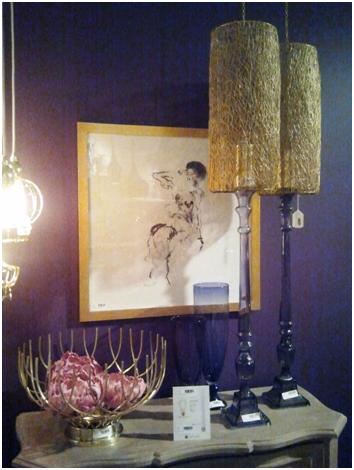
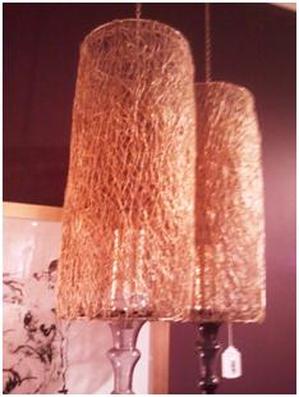
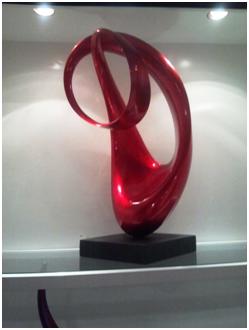
We loved the massiveness of this fixture and the simplicity as well! By La Murrina SkLO Studios
The "Enigma"
Thanks for reading!
-Larry
We get asked all the time “Why is an interior designer necessary?” While it is true that there are many people around that have an inherent eye for design, a trained professional interior designer goes much deeper into economic cultivation through psychology and branding…
I want to present to you a short and informative Interior Design Video that explains what Interior Designers really do – unlike some of what the "TV" programs imply, which only confuses the public. Here is an amazing video that Radford University students have created as a competition for IDEC (Interior Design Educators Council), which was awarded first place at the IDEC Conference. NCIDQ sponsored this competition. It is an interesting and entertaining approach to explain our benefits to the public. Thanks for reading!
Larry
Guest Rooms
Minimal, Clean and Timeless… The current trend in room design is just that!
Design demands for today’s hotel need to be durable, maintenance friendly and appealing to all demographics. They need to be trendy and hip enough for a younger crowd, and have a comfortable and cozy appeal for older, more seasoned clientele. Hotel operators and developers require more longevity for their inventory in todays economy than ever before.
Eureka Mesquite Patio Room - By WHL Design Group - Warm and Minimal
C reating a space that is technologically and environmentally savvy is also a key element in design. Today’s travelers with iPads, laptops and smart phones require ease and convenience of connecting and charging.
 Eureka Mesquite Spa Suite; Comfortable and Functional while Spa like
Finding the design balance between function and aesthetics is the trick. Here we see easy to maintain finishes with neutral to warm color palettes and textural finishes.
Thanks for reading!
Larry
Bathrooms
Increased competition, market saturation and rising expectations of visitors mean that hotels must not only widen their choices and raise their standards of service, but also invest in interior design. Currently, guests expect a hotel to not only meet the basic requirements for accommodation, but guarantee comfort, relaxation and a pleasurable stay. Sophisticated, well-equipped bathrooms, tasteful and prestigious decor, and the use of sumptuous materials raise the standards of a facility and provide fond memories of that hotel.
Eureka Mesquite Resort Suite Bathroom By WHL Design Group | Eureka Mesquite Resort Suite Bathroom By WHL Design Group |
Bathroom areas in hotels are usually small. Accumulated clutter and the “necessaries” in such a space can cause the decorative elements to be lost, overwhelmed, and obscured. Therefore, a minimalist style is ideal for hotel bathrooms – with a strong, clear accent. Small bathrooms prove themselves with friendly materials and larger scales; large mirrors filling an entire wall or placed on two walls, polished and shiny materials, and decorative lighting highlight the nuances of space. Spa Suite Bath at Eureka Mesquite Watch for part two on Hotel Rooms!
-Larry
We have all seen the old-dresser-made-to-look-new by re-painting it. But what about some more creative and innovative ways to furnish and decorate your home, while recycling materials that otherwise would end up in a land fill? Some of these pieces can be accomplished by the do-it yourself crowd, and some might need more shop skills that the ordinary person has.
Take a look at some of these pieces:
Here we have a modern chair whose seat and back is made from old CDs (probably might need some shop skills for this one).
Old ball point pens used to create a chandelier.
Old leather belts used to create flooring, but could also be applied to walls.
Wind chime created using glass rings cut from bottles.
Old entertainment center (for the giant TVs no one uses anymore) repurposed into a play kitchen for the kids.
And to reuse the giant TV, turn it into a fish tank.
Here is another chair, but this one is made from plastic water bottles.
Another chair requiring shop skills, but a great reuse for old shopping carts.
A chair made from old hard sided luggage.
A tiered movie/TV room made from wooden pallets.
Teacups turned into pendant lights.
As you can see, there are plenty of ideas out there to help you get those creative juices flowing. Have fun creating!
-Carol
Hello Everyone!
 World Market Center in Las Vegas, NV Having just completed the previews of the winter 2012 Interior Design and Accessory Market here in Las Vegas, we thought we would share what are the latest and greatest interior design trends coming for this year and next year! As we dust off 2011 and the winter months, here are the newest ideas and trends!
Bold Color Accents! – Reds, Greens, Oranges, Yellows
Bold colors around the home, whether it’s a pillow, decorative accent, or simply a wall color with bright hues, are this year’s boost to up our moods and mix it up! | 1920′s Inspired Looks
Play around with a retro feel to your home by buying retro 1920′s inspired pieces or actual vintage pieces from that era. Couches, chairs and artwork all help to create a retro vibe.
|
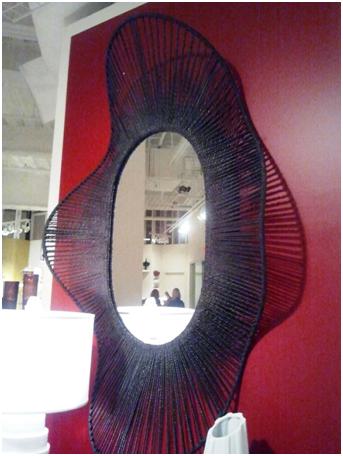
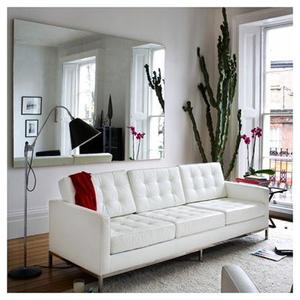
Large Mirrors
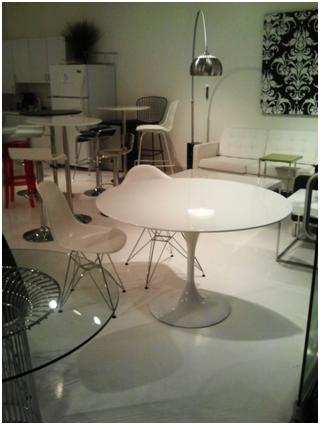
Mirrors are growing larger this year and they’re perfect for opening up a room and helping it to appear larger than it is. | White Furniture and White Accents
Just like in fashion, white furniture and white wooden accents are growing in popularity. White items are being used around the home to create a lighter, more open space.
|
Rooms Inspired By Nature
Create a room that reminds you of earthy elements, such as blue walls equal blue skies, or green walls reminding you of grass and trees.
| Oval and Round Mirrors
Update your home by simply adding oval and round mirrors instead of the traditional squares.
|
Hope you are inspired! -Larry
Hello Everyone!Often when purchasing for a design project we have a tight budget we have to work with. In order to meet those budgets, I will often help the designers find a more affordable version of a product they have picked out. Below you will find some popular items for the home along with a more affordable alternative. You’d be amazed at the savings you will find when you take the time to research. Google Product Search is one of my favorite methods for price comparisons. The Eileen Gray Side Table
Eileen Gray Adjustable Side Table by ClassicCon at Design Within Reach | ALTERNATIVE: Eileen Adjustable Table by Zuo from Lamps Plus |
Eileen Gray was a pioneer of the Modern Movement in Architecture. Her Eileen Gray Adjustable Side Table by ClassicCon at Design Within Reach costs $1,150.00At Lamps Plus you can get a similar version produced by Zuo for only $238.91. A savings of 80%! The Barcelona Chair by Knoll
Barcelona Chair by Knoll | ALTERNATIVE: Hercules Chair by Flash Furniture |
The Barcelona Chair by Knoll has been around since 1929 at Design Within Reach it costs $5,063.00. A more affordable alternative with the same look is the Hercules Chair by Flash Furniture – Bizchair.com $299.00. If you purchase the alternative you’ll save 95%! The Tolix H70 Stool
The Tolix H70 Stool | ALTERNATIVE: Tabouret Metal Stool from Overstock |
The Tolix H70 Stool has been around since 1950 at Sundance it costs $250.00 ea. A more affordable version can be found on Overstock! The Tabouret 30” Metal Barstool costs $93.59 for a set of 2! A Savings of 81% The Beat Light by Tom Dixon
The Beat Light by Tom Dixon | ALTERNATIVE: Pendant By Patriot Lighting |
The Beat Light by Tom Dixon on Lumens.com costs $490.00. Patriot Lighting produces a similar pendant that’s more affordable at Menards it costs only $29.99! Wow, that's a savings of 94%! Cardiff Tufted Armchair from Pottery Barn
Cardiff Tufted Armchair from Pottery Barn | ALTERNATIVE: Tafton Club Chair from Overstock |
The Cardiff Tufted Armchair from Pottery Barn costs $799.00. You can go for this similar alternative available at Overstock – The Tafton Club Chair costs only $376.99 You’ll save 53% if you purchase the alternative instead! Crate & Barrel Spool Accent Table
Spool Accent Table from Crate & Barrel | ALTERNATIVE: Bailey Accent table from Overstock |
Instead of wood, the Crate & Barrel Spool Accent Table is made from steel and aluminum, it costs $229.00. The Bailey Accent Table looks very similar, is made of steel and costs only $93.99 at Overstock.com! Best of all, you’ll save 59% by going with the alternative! The Eames Lounge Chair & Ottoman by Herman Miller The Eames Lounge Chair & Ottoman by Herman Miller | ALTERNATIVE: Hercules Presidio Series Lounge Chair & Ottoman available on Amazon |
The Eames Lounge Chair & Ottoman by Herman Miller is a classic, it's also very pricey, at Hivemodern.com it costs $4,499.00. The Hercules Presidio Series Lounge Chair and Ottoman on Amazon is very similiar to the original except for the price! It costs only $699.00! You’ll save 85% by choosing the alternative version! -Cassandra
Last time Larry talked about paint, but now comes the best part, the painting! It doesn’t have to be hard, and anyone can do it. Here are some of my tips for getting a great paint job – by doing it yourself!
There are plenty of sites that offer how-to’s on painting, but here are some of the basic ideas with my tips that I have used on my many painting projects. Prep Work
Most of the difficult and tedious part of painting is the prep work, and about 75 percent of your time will be spent doing this. Patch holes and cracks with a filler product, sand lightly when dry; home centers or paint stores have knowledgeable personnel to guide you to the best products for the job - I like to use my finger to apply, especially if it is a small patch – that way you have very little sanding to do
- I also like the colored fillers that dry white – no more guessing if it is dry
Remove light switch and outlet covers and any hardware or light fixtures that you can, replace the screws in the outlet if you have a tendency to lose things, then tape over what is left on the wall - If new switch plates are not in the budget and the existing ones look sad,they can be painted separately and then re-attached – just don’t paint them in place or you won’t be able to remove them very easily
If you can’t remove something, cover it with plastic bags or plastic wrap and tape edges - Use plastic grocery bags for this (tape a few together if you need a larger size), don’t buy anything special
Sand or clean areas to be painted; any old dirt, grime, flaking paint, dust or debris left on the wall could cause your new paint to peel - Use a flat sanding block to make quick work of large areas
Tape all door and window trims and baseboards; this keeps goofs from getting on the trim - Tedious, I know, but it really should be done
Cover the floor with a plastic or canvas drop cloth - I like to use cardboard for this (flatten out a box and tape flaps together); it’s easy to move along with you as you paint, and you don’t have to cover the entire room at once – not to mention, the plastic drop cloths stick to your feet!
Now For The FUN Part - Painting! Paint the wall edges and trim areas first, using a brush - I like a decent quality angled brush, 2” to 2 ½” wide – I use one with a long handle and one with a short rubber handle, good for tight spaces
Roll paint onto the walls with the correct roller cover; using a long handle extension keeps your ladder usage to a minimum - I tend to roll slowly to prevent the tiny paint splatters, and you can see how good the coverage is – don’t try to “stretch” the paint too far – make sure an area is completely covered before moving on
- I like to work an area no bigger than 4’ x 4’ at a time, blending into the next area so the edges don’t dry
- If your roller cover is new, use masking tape to help get loose fibers off before painting
If you need more than one day for your project, cover your paint tray, can, roller, brushes, etc. with plastic, making sure to get as much air out as possible to keep tools from drying out – that way you only have to clean up at the end of the job - In our dry desert climate, I do this even when taking a break
No matter how careful you are, there will be some goofs; I like to keep a bucket of water and a cloth rag nearby to clean up anything before it dries Remove tape from trim and baseboards, don’t let the tape stay on for longer than a day or two - For a really clean line, cut the dry paint with an Xacto knife along the tape edge, otherwise you may pull your new paint off the wall
Paint the door and window trims and baseboards using a paint brush – never a roller - Put a strong rubber band across the top of the paint can to use for scraping your brush off; this keeps the can’s lip clean
If you have a fairly steady hand, you can skip some of the taping and paint your trim freehand or use a painter’s edge – just wipe the edge off each time you move it to keep from smearing on the newly painted wall
Some Tips For Getting YOU Ready To Paint
- Remove all jewelry
- Wear old, but comfortable clothes
- Wear slip on shoes
- Protect your hair with a scarf, shower cap, or baseball hat
- Wear safety glasses to protect your eyes from splatters
- Wear gloves to protect your hands and nails – paint is difficult to remove if you are wearing nail polish
- If you can’t wear gloves, try applying hand lotion to keep the paint from sticking to your hands
- If you must have your phone nearby, keep it inside a plastic bag to protect it
- Play some music to get you going
- And don’t be shy about asking your friends to help – some people really do like to paint!
-Carol
Well, hello again everyone!
You know, nothing is as easy to change the look of a space or room than 30 dollars and a free afternoon. Okay and a little skill perhaps. I have always said simply taking the time to paint a room or accent wall with a fresh coat of paint (in a wonderful color, of course) is the easiest and quickest way to make that change and breathe new life into an interior!
Before and After
Stop Worrying!
It’s not really that big of a deal and you will be glad you did it. Nothing makes a space feel clean and fresh like a new coat of paint. Okay, so do you struggle with selecting a paint color and type? Hmmm… What to do… I know! Try …. whldesign.com! I hear they have an awesome “virtual designer” site that can take the sting out of these selections. But here are a couple of tips anyway. First off, know the surfaces that you are painting and the conditions that they are in and do the necessary preparation work required to receive the paint. If you are not sure, you can use the “Ask the Designer” feature at whldesign.com that is totally free! Never turn down a good free opportunity!
Next, make some paint selections and if the store has small samples, get them! The colors will look SO different in your house based on your lighting type and how much daylight you get.
Everything will look different in the evening too! So paint a small area and look at it for at least 24 hours in the morning, mid-day, and evening - with lights and television on too!
The only time this is not necessary is if you have had warehouse lighting purposely installed in your house. You know, like Lowes?
If this is the case, forget the paint! You have bigger issues to deal with!
Some paints require primers or first coats to make sure that the color reads correctly. This is mostly true of deeper saturated colors. It is also true when you are painting a darker wall lighter or a lighter wall darker!
But what are all the paint types? I have heard of flat, semi gloss, low VOC, latex and enamel but what exactly are these, and what is each application for?
Well Here Is Your Cheat Sheet!
PRIMERS / SEALERS: These coatings are designed to provide a surface for the finish coats of paint or clear finishes. Primers seal the surface off and provide a "tooth" for the finish paint; they are used on bare wood and metal, previously painted surfaces that have been repaired or are in poor condition (flaking or peeling), or if the existing surface is to be painted with a new color that is much darker or lighter than the existing color. Primers/Sealers are also used to block out stains like water stains, crayon, smoke, soot, ink, and on woods that will bleed through a paint coating, i.e. cedar or redwood. Primers/Sealers insure a longer lasting paint finish, as the resins in the finish paints stay on the surface, creating the "wear layer" as they are designed to do. Peeling and premature failure is eliminated and this is by far the most important part in getting a long lasting, durable finish. FINISH PAINTS: There are two types of paints used today, latex and alkyd. Alkyd paint is also known as oil-based paint. Latex provides an excellent finish, while being an easier paint to use. Latex paint cleans up with soap and water, dries quickly, has less odor, is non-flammable, easy to touchup, and remains more flexible and allows moisture to evaporate through the film, thus reducing blistering, cracking and peeling.
Inexpensive latex paints use softer vinyl resins (binders) and more water in the formulation, while the more durable of the latex paints use 100% acrylic resins and less water (you only get what you pay for). The term "Enamel" is normally associated with paints that have some gloss to the finish. Enamels are formulated with higher concentrations of resin, as they are intended to be subjected to more wear and tear. LEVELS OF GLOSS: The sheen of paint is the amount of light reflected by the surface of the paint finish. There are four basic sheens: flat, satin, semi-gloss and gloss. Flat Paints: These paints exhibit non-reflective properties, providing a matte finish. This finish helps hide surface imperfections, and is normally used for ceilings, and walls in areas not subjected to a lot of wear and tear, like dining rooms, living rooms and bedrooms not used by small children. Satin Paints: Also know as eggshell finish, satin paints provide a soft luster sheen similar to that of an eggshell. A satin finish provides a harder surface finish, which is more durable and more stain resistant than a flat finish. This durability makes satin finish paint a good choice for walls in children's rooms, hallways, stairways and family rooms. Semi-gloss Paints: These paints are very durable; they are easier to clean and are more stain resistant than satin finish paints. Semi-gloss paints are most often used on heavy wear surfaces or in areas that are frequently cleaned, such as kitchens and bathrooms. Semi-gloss paint is also used on wood trim and cabinets.
Gloss Paint: This is a harder, more durable, more stain resistant paint finish. It is easier to clean than all the other paint finishes. Gloss finishes generally make surface imperfections more noticeable. Gloss finishes are the best choice for heavy wear areas like kitchens, bathrooms, furniture and cabinets, floors, stairs, handrails, high traffic doors and trims. Which type of paint should you use? Two properties you need to consider: how much wear and tear will the surface get and is a sheen or gloss to the finish going to conflict with your decorating scheme. If you are painting a storage room or other area which will be subjected to hard use and frequent washings, go with the highest gloss, as these paints are designed for just that. If the "feel" of the room is important, such as a living room or bedroom, choose the lower gloss finishes for a calm, soothing feeling.
Going Green!
Okay these might be a little “Sciency”, but they are easier on the environment!
Types of Non-Toxic Paints and Finishes: The term "non-toxic" is used here in its broadest sense. With paints and finishes, it's more a matter of degree. Even Zero VOC (Volatile Organic Compounds) formulations contain some small amounts of toxins. There are three general categories of non-toxic (or low-toxic) paints: Natural Paints, Zero VOC, and Low VOC.
Natural Paints and Finishes: These are paints made from natural raw ingredients such as water, plant oils and resins, plant dyes and essential oils; natural minerals such as clay, chalk and talcum; milk casein, natural latex, bees' wax, earth and mineral dyes. Water-based natural paints give off almost no smell. The oil-based natural paints usually have a pleasant fragrance of citrus or essential oils. Allergies and sensitivities to these paint types are uncommon. These paints are the safest for your health and for the environment.
Zero VOC: Any paint with VOCs in the range of 5 grams per liter or less can be called "Zero VOC", according to the EPA Reference Test Method 24. Some manufacturers may claim "Zero VOCs", but these paints may still use colorants, biocides and fungicides with some VOCs. Adding a color tint usually brings the VOC level up to 10 grams per liter, which is still quite low.
Low VOC: Low VOC paints, stains and varnishes use water as a carrier instead of petroleum-based solvents. As such, the levels of harmful emissions are lower than solvent-borne surface coatings. These certified coatings also contain no, or very low levels, of heavy metals and formaldehyde. The amount of VOCs varies among different "low-VOC" products, and is listed on the paint can or MSDS (Material Safety Data Sheets). Paints and stains, to meet EPA standards, must not contain VOCs in excess of 200 grams per liter. Varnishes must not contain VOCs in excess of 300 grams per liter. As a general rule, low VOC paints marketed by reputable paint manufacturers usually meet the 50 grams per liter VOC threshold. Paints with the Green SealStandard (GS-11) mark are certified lower than 50 grams per liter (for flat sheen) or 150 grams per liter (for non-flat sheen). Low VOC paints will still emit an odor until dry. If you are particularly sensitive, make sure the paint you buy contains fewer than 25 grams per liter of VOCs.
Okay now…
Wake Up!
And Start Painting!
-Larry
Today prompted us to take a look at some of the prominent African American Citizens that have made contributions to the field of Architecture and Interior Design. One of the more prominent was Paul Williams. African American Architect, Paul Williams Born in 1894, Paul practiced largely in Southern California and designed the homes of numerous stars including Frank Sinatra, Lucille Ball/ Desi Arnaz, Lon Chaney, and Charles Correll. He also designed many public and private buildings. Orphaned at the age of four, Williams was the only African American student in his elementary school. He studied at the Los Angeles School of Art and Design and at the Los Angeles branch of the New York Beaux-Arts Institute of Design Atelier, subsequently working as a landscape architect. He went on to attend the University of Southern California, School of Engineering, designing several residential buildings while still a student there. Williams became a certified architect in 1921, and the first certified African American architect west of the Mississippi.
Williams won an architectural competition at age 25 and three years later opened his own office. Known as an outstanding draftsman, he perfected the skill of rendering drawings "upside down." This skill was developed so that his clients (who may have been uncomfortable sitting next to a black architect) could see the drawings rendered right side up across the table from him. Struggling to gain attention, he served on the first Los Angeles City Planning Commission in 1920. From 1921 through 1924 Williams worked for Los Angeles architect John C. Austin, eventually becoming chief draftsman, before establishing his own office. Williams became the first African-American member of the American Institute of Architects (AIA) in 1923. In 1939, he won the AIA Award of Merit for his design of the MCA Building in Los Angeles (now headquarters of the Paradigm Talent Agency). Some of his famous work: Paul Passed away in 1980 and is remembered for this quotation…
"If I allow the fact that I am a Negro to checkmate my will to do, now, I will inevitably form the habit of being defeated."
-Larry
|